
How Much Steel Is Hiding Inside a Data Center?
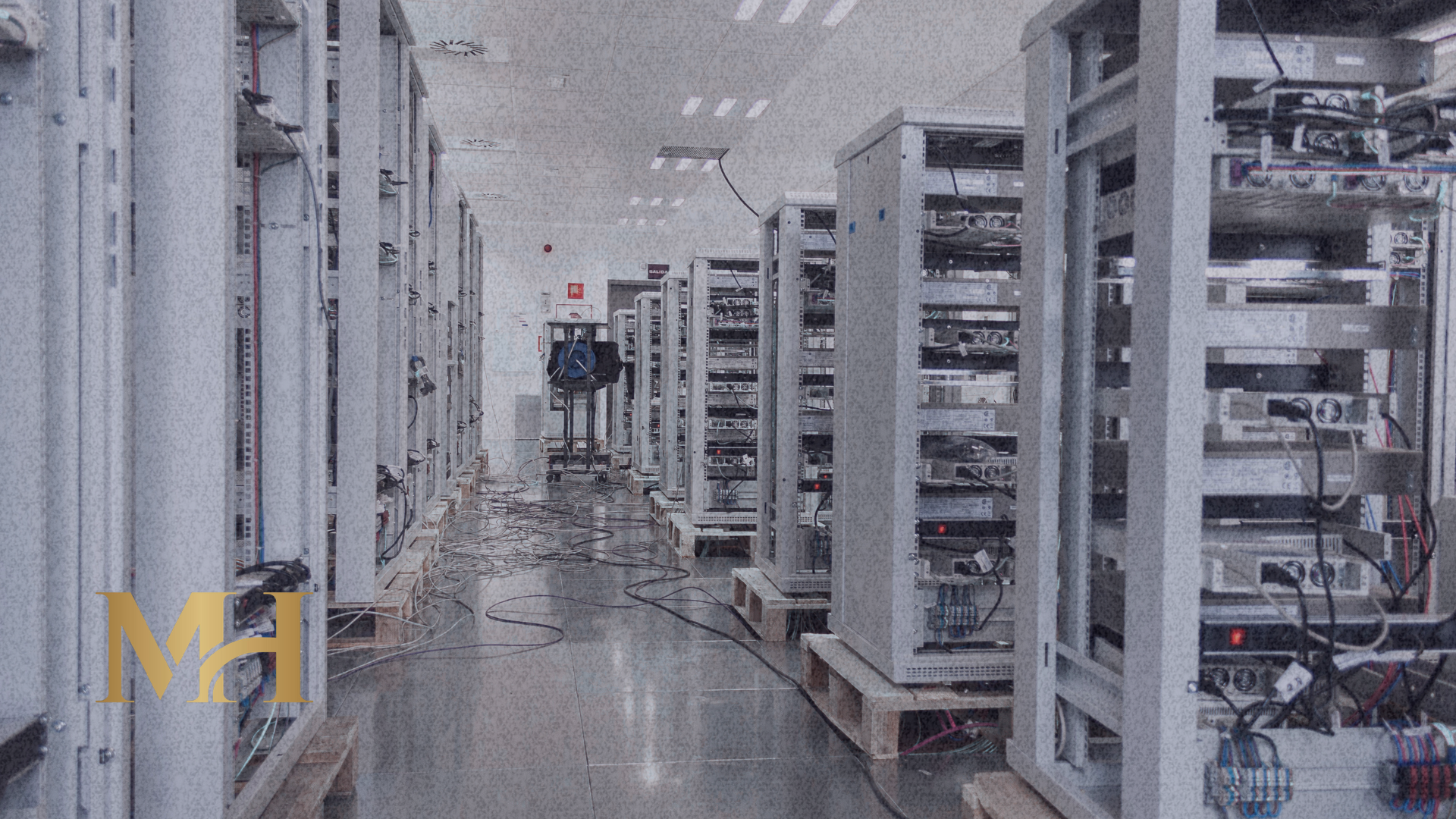
When most people picture the internet, they picture something almost weightless: Wi-Fi signals, cloud storage, streaming services, artificial intelligence, emails and information moving around the world in seconds.
But the internet is surprisingly physical. Behind every search, stream, online purchase, AI prompt and cloud-based application is an enormous network of data centers filled with servers, electrical equipment, cooling systems and supporting infrastructure. And before any of that technology can operate, someone has to build the structure around it.
That means concrete. Copper. Aluminum. And a lot of steel.
As demand for artificial intelligence, cloud computing and digital services drives continued data center construction, the conversation about our digital future is increasingly becoming a conversation about physical infrastructure and the materials required to build it.
So, how much steel is actually hiding inside a data center? The answer is more complicated – and more interesting – than just counting beams.
The Internet Has a Physical Address
We tend to talk about digital information as though it exists somewhere above us.
We upload photos "to the cloud." We stream movies instead of storing physical copies. Businesses move their operations online. AI models process enormous quantities of information almost instantaneously.
But every one of those activities ultimately relies on physical computing equipment housed somewhere in the real world.
Data centers provide the controlled environments needed to operate thousands of servers and other pieces of computing and networking equipment. Some facilities serve individual companies, while hyperscale data centers can support enormous cloud and technology operations.
And these aren't ordinary commercial buildings. Data centers have to accommodate heavy equipment, significant electrical demand, sophisticated cooling infrastructure, backup power systems, security requirements and, increasingly, the enormous computing loads associated with artificial intelligence.
So, How Much Steel Is in a Data Center?
There isn't one universal number.
The amount of steel required for a data center varies considerably based on the facility's size, structural design, geographic location, equipment configuration, power requirements and construction method.
A small enterprise data center and a sprawling hyperscale campus aren't remotely comparable.
That's why asking, "How many tons of steel are in a data center?" without knowing the project specifications can be misleading.
A better question is where is steel being used?
Once you start looking at a data center through that lens, steel appears almost everywhere.
1. Structural Steel
Start with the building itself.
Depending on the design, structural steel may be used for columns, beams, joists, framing, roof systems, equipment supports and other load-bearing components.
Data centers can place unusual demands on a structure because of the density and weight of the equipment they contain. Structural systems have to support not only the building but also the infrastructure necessary to keep computing equipment operating reliably.
And the structure is only the beginning.
2. Server Racks and Equipment Enclosures
Walk inside a data center and you'll typically encounter rows upon rows of server racks.
Those racks provide the physical framework that organizes, protects and supports computing equipment.
Steel is commonly used in racks, cabinets, enclosures and supporting hardware because these systems need durability, strength and precision while accommodating substantial amounts of equipment.
One rack doesn't sound particularly remarkable.
Multiply it across a large data hall or an entire hyperscale campus and suddenly the material requirements look very different.
3. Cooling Infrastructure
All that computing generates heat. Keeping servers within acceptable operating temperatures is one of the fundamental challenges of data center design, and cooling infrastructure represents another significant physical component of these facilities.
Depending on the cooling strategy, metal can be found throughout equipment supports, piping systems, mechanical structures, cooling units, containment systems and associated infrastructure.
As computing density increases, particularly with AI workloads, cooling strategies are becoming even more important.
More computing doesn't simply mean more servers.
It can mean more infrastructure supporting those servers.
4. Electrical and Power Infrastructure
A data center without electricity is essentially a very expensive warehouse.
Modern facilities require extensive electrical infrastructure to receive, distribute, regulate and back up enormous amounts of power.
Steel and other metals can be found throughout equipment housings, support structures, electrical enclosures, cable management systems and infrastructure associated with generators, switchgear and backup power.
But the steel story doesn't stop at the property line.
Increasing electricity demand from data centers also places attention on the broader infrastructure required to generate and deliver that power.
Transmission structures. Substations. Transformers. Generation facilities. Renewable energy projects. Suddenly, the material footprint of the digital economy extends far beyond the data center itself.
5. Cable Management and Supporting Systems
Thousands of connections have to go somewhere.
Cable trays, supports, framing systems, access flooring components and other secondary systems help organize the dense networks of power and data cables running throughout these facilities.
Individually, these components may seem small compared with a structural beam. Collectively, they're another reminder that data centers are complex industrial environments, not simply rooms filled with computers.
6. Security and Exterior Infrastructure
Data centers are critical infrastructure, and physical security matters.
Depending on the facility, metal may also appear in fencing, gates, bollards, security structures, exterior equipment supports, platforms, stairs, ladders and maintenance access systems.
There are layers of infrastructure surrounding the infrastructure. And all of it has to be designed, fabricated, sourced and installed.
AI Is Making the Physical Side of the Internet Harder to Ignore
Artificial intelligence has made the relationship between digital growth and physical infrastructure particularly visible.
Training and operating advanced AI systems requires significant computing capacity. That computing capacity requires facilities. Those facilities require electricity and cooling. Electricity requires generation and transmission infrastructure.
And all of those systems require materials. That's an important distinction in conversations about the future of technology.
Software can scale rapidly. Physical infrastructure takes planning.
Steel has to be produced. Material has to be available in the correct grade, shape and quantity. Fabricators need it on schedule. Trucks have to move it. Contractors need it delivered when their crews are ready.
A digital boom can create very physical supply-chain challenges.
Why Metal Distribution Matters
This is where metal distribution enters a conversation that might otherwise sound like it belongs entirely to technology companies and engineers.
A steel mill produces material. A finished data center requires countless pieces of that material to reach fabricators, manufacturers, contractors and other businesses throughout the construction supply chain. Between those two points is an enormous amount of coordination.
Distributors help connect available supply with real-world demand. Depending on the customer and project, that can involve sourcing material, managing availability, coordinating quantities, navigating lead times and arranging transportation.
The value isn't simply moving steel from Point A to Point B. It's helping make sure the right material can reach the right customer at the right stage of a project. And when construction schedules are aggressive, that matters.
The Supply Chain Starts Long Before the Servers Turn On
By the time a data center begins processing its first piece of information, an entirely different network has already been at work.
Mills produced material. Distributors sourced it. Freight moved it. Fabricators transformed it. Contractors installed it. Electricians, engineers, equipment manufacturers and countless other professionals built the systems around it.
The finished facility may represent some of the most advanced technology in the world, but its construction still depends on industries that have been building America for generations. That's the connection that's easy to miss.
The Cloud Is Built on the Ground
There may never be a single satisfying answer to "How much steel is inside a data center?" because every project is different.
But perhaps the more important takeaway is how many different roles steel and other metals play throughout the infrastructure.
The building. The racks. The electrical systems. The cooling equipment. The supporting structures. And even the power infrastructure beyond the facility itself. And long before the internet reaches your screen, someone had to supply the materials that helped build the infrastructure behind it.
